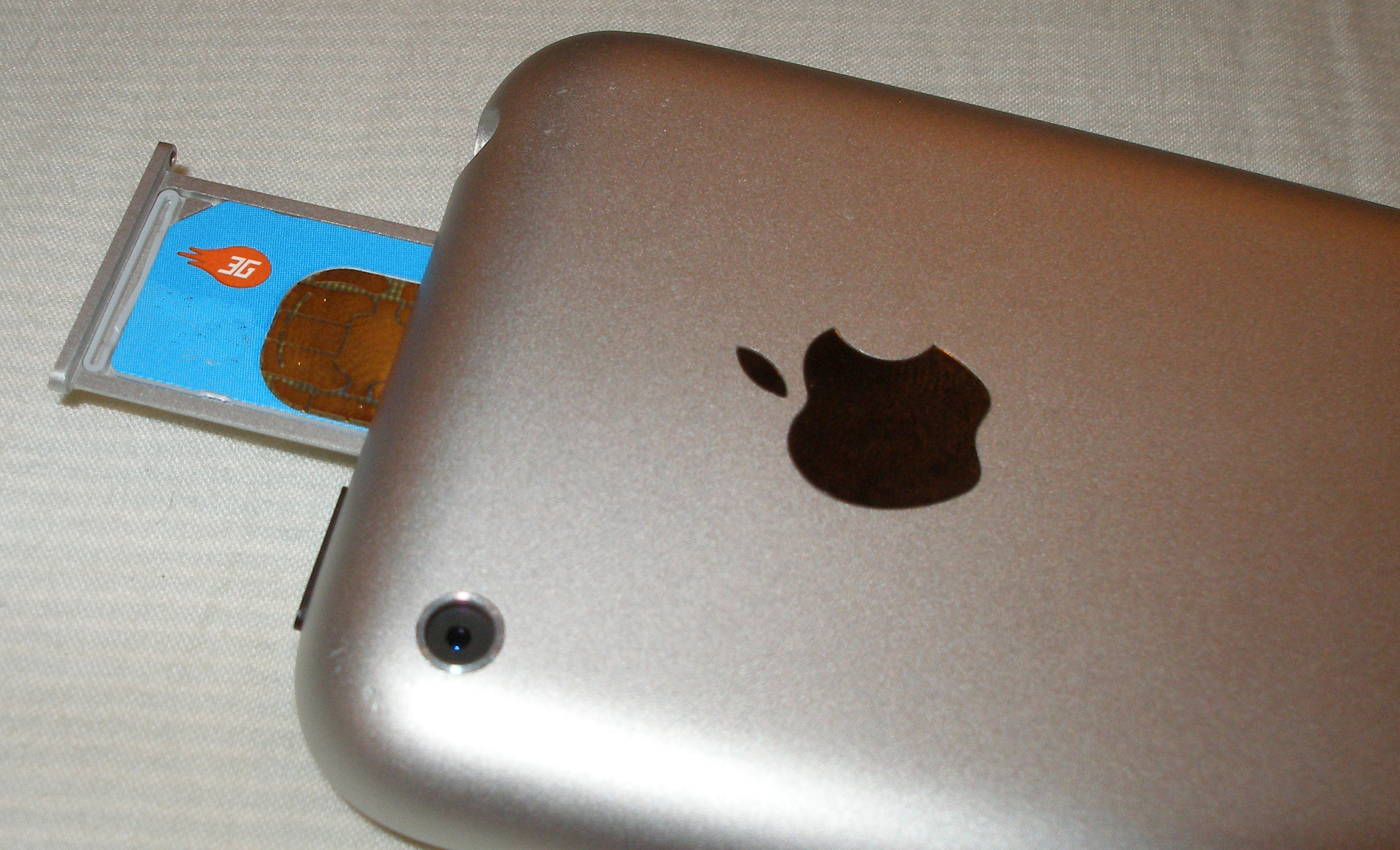
Aido2002 / Wikimedia Commons, CC BY-SA 2.5

US iPhones have shipped with no SIM tray at all since the iPhone 14 in 2022, and Google followed with the Pixel 10 in 2025 - but step outside the US and the tray is still standard on most flagship lines.
MacRumors, 2022; 9to5Google, 2025| # | Name | At a glance |
|---|---|---|
| 1 | iPhone 16 / 17 (international & China models) | Tray outside the US; eSIM-only in the US since 2022 |
| 2 | Samsung Galaxy S25 / S25+ / S25 Ultra | 1 tray (US) or 2 trays (international) |
| 3 | Google Pixel 9 / 9 Pro / 9a | Tray in the US and everywhere else |
| 4 | Google Pixel 10 / 10 Pro / 10 Pro XL | No tray in the US; tray everywhere else |
| 5 | OnePlus 13 (global) | Dual physical SIM tray |
| 6 | Xiaomi 15 series | Dual tray in China; tray in global units |
| 7 | Nothing Phone (3) | Dual-SIM tray in most markets |
| 8 | Motorola Edge 50 / 60 series | Tray plus newly added eSIM |
| 9 | Sony Xperia 1 VI / Xperia 10 VI | Tray, configuration varies by carrier |
| 10 | Fairphone 5 | Dual physical SIM slots |
-
01
iPhone 16 / 17 (international & China models) #
Tray outside the US; eSIM-only in the US since 2022
In the US, every iPhone since the 14 (2022) has shipped eSIM-only. Everywhere else, and in mainland China and Hong Kong specifically, it still ships with a physical nano-SIM tray, with China models taking two.
-
02
Samsung Galaxy S25 / S25+ / S25 Ultra #
1 tray (US) or 2 trays (international)
US units get one physical nano-SIM slot plus dual eSIM. International units keep two physical SIM slots plus dual eSIM, making the S25 line one of the last flagships to hold onto multi-SIM hardware outside America.
-
03
Google Pixel 9 / 9 Pro / 9a #
Tray in the US and everywhere else
The last Pixel generation to ship with a physical SIM tray in the US market, before Google cut it for the 10 series in 2025.
-
04
Google Pixel 10 / 10 Pro / 10 Pro XL #
No tray in the US; tray everywhere else
Google dropped the physical SIM tray for US units in 2025, following Apple's lead, but every other market where the Pixel 10 sells keeps the slot.
-
05
OnePlus 13 (global) #
Dual physical SIM tray
Ships GSM-only with a dual nano-SIM tray in its global release, with no eSIM support at all.
-
06
Xiaomi 15 series #
Dual tray in China; tray in global units
The China variant carries two physical SIM slots and no eSIM whatsoever; the global variant keeps a tray too.
-
07
Nothing Phone (3) #
Dual-SIM tray in most markets
Nothing's flagship keeps a conventional dual physical SIM tray across the markets it officially sells in.
-
08
Motorola Edge 50 / 60 series #
Tray plus newly added eSIM
Motorola added eSIM support to the Edge line without removing the physical tray, giving buyers both options at once.
-
09
Sony Xperia 1 VI / Xperia 10 VI #
Tray, configuration varies by carrier
Sony's current flagships keep a physical SIM tray, in either a single-SIM-plus-eSIM or dual-SIM/microSD combo layout depending on the exact model and carrier.
-
10
Fairphone 5 #
Dual physical SIM slots
The repairability-focused, EU-market Fairphone 5 runs Dual SIM Dual Standby off two physical SIM slots, with no eSIM required.
FAQ
Why did iPhones stop having a SIM tray?
Apple removed the physical SIM tray from US iPhone models starting with the iPhone 14 in 2022, pushing US buyers to eSIM only. iPhones sold outside the US, and in mainland China and Hong Kong specifically, still ship with a tray.
Which flagship phone still has a SIM tray in every market, including the US?
The Samsung Galaxy S25 line keeps a physical SIM tray in the US (one slot, plus dual eSIM) and internationally (two slots, plus dual eSIM), making it one of the most consistent holdouts.
Is eSIM-only becoming the standard?
It's heading that way in the US specifically - Apple went eSIM-only there in 2022 and Google followed with the Pixel 10 in 2025 - but most brands still ship a physical tray in the rest of the world.